A Journey of Healing
Sometimes, the biggest heroes are those who have, at some point needed a hero of their own. This goes for humans as well as animals; again and again, we see those who’ve lived through struggles coming out stronger and being able to help others. One shining example is Chips, a pony who in 2014 was a victim of abuse and neglect.

Chips needed a hero, and it came in the form of a family who rescued him, worked to gain his trust, and eventually began his therapy training. Looking back, you’d never recognize the matted, fearful Chips of 2014 as the Chips of today – a gentle creature who provides life-changing therapy visits to kids with autism and mood disorders. A grant from 1FUR1 allows Chips to make bi-weekly visits to patients like Gavin – a 10-year-old with autism and mental retardation.

Since beginning these animal therapy visits, Gavin has made so much progress in his ability to focus and coordinate movements. Gavin’s medical plan is monitored by a licensed therapist, but his low-income family’s insurance won’t cover the cost. Therefore, his life-changing visits with Chips are only possible because of a grant from 1FUR1 Foundation.

Chips needed a hero in 2014. Now, Chips is a hero to Gavin and so many others. Won’t you be a hero today? Donate to provide animal therapy support to those in need. Together we can help animals heal people.
Gentle Giant and 1FUR1 Ambassador in Chicago
If you looked at Dolan, a Great Dane who three years ago was emaciated, homeless, and hopeless, you would not have thought that he’d go on to do great things. But after being taken in by Just Giants rescue, getting adopted by loving new parents, and joining forces with 1FUR1, he has gone on to make a difference in many lives as a therapy dog. To be exact, he brightens the lives of 60-75 seniors each month.

Dolan visits these elderly friends at the largest Hispanic social service agency in the Midwest. Many of the seniors don’t speak English, but are comforted by Dolan’s cuddles and gentle woofs. In fact, animal-assisted activities (AAA) like this program can provide health benefits such as decreasing blood pressure and heart rate while increasing stress-reducing hormones such as oxytocin, dopamine, and endorphins.

1FUR1 is celebrating our first full year of working with Dolan and his owner, Sarah, a healthcare professional living in Chicago. Sarah was always curious about animal-assisted therapy (AAT) and animal-assisted activities (AAA). For her graduate studies, she researched and wrote her thesis and dissertation about animal assisted therapy. After finishing her PhD, she knew she wanted to adopt a dog. She looked into local rescues and found Dolan, a 5 year old Great Dane. As an older pet, he came with some benefits you don’t get with a puppy.

Fast forward two years, and Dolan has become an extraordinary pet and loving therapy dog to the local retirement home. During his monthly visits to Casa Central, he helps to improve the lives of at least 70 seniors in Chicago. Some people talk about their pets at home while others love to pet and dance with him. Dogs like Dolan help people suffering from loneliness, Alzheimer’s, and dementia. He is goofy, sweet, and patient – the perfect recipe for a therapy dog. He brings joy to those around him and we are truly lucky to have him be 1FUR1 Chicago Canine Ambassador.

If you think your dog would enjoy visits to people at assisted living facilities, hospitals or retirement homes, remember a few tips. You and your dog should enjoy spreading joy. Assisted activity and/or therapy dogs are required to; 1) posses a natural predisposition to like interacting with various groups of people, 2) obedience training and 3) pass a test by a licensed trainer. You should also ask questions and get involved with us – 1FUR1 Foundation offers various volunteer opportunities. If you want to start a conversation about therapy dogs and learn more information, check out our articles in 1FUR1’s Animal Blog. If you are passionate about this, we would love to partner with you.
How Tori the Therapy Pony Helped Ezra Find his Voice
One day in mid 2016, a six-year-old named Ezra spoke for the first time. Defined as low functioning on the Autism spectrum, he’d never before been able to communicate verbally. He wasn’t able to say the words that help connect us: “Hello,” “Thank you,” “I love you.”
 Today, thanks to an amazing miniature pony named Tori, Ezra speaks and continues to find his voice. He can even be heard singing some days, at his family’s home or in the public school where he has successfully enrolled.
His outstanding progress is due to weekly animal assisted therapy sessions made possible by 1FUR1 Foundation – a nonprofit started and headquartered in Illinois, now with a chapter in Southern California. With a mission to “Help Animals Heal People,” 1FUR1 sponsored 85 animal-assisted therapy sessions for Ezra between December 2015 and January 2017.
Tori, aka Peanut, is a gentle pony who’s been training for therapy since she was nine months old. Her owner, Melissa Sargent, knew Tori was a special soul from the start. Tori completed animal therapy certification when she was one and a half years old. She loves her work; today she rides elevators, climbs stairs, and rides in a van to meet her “patients.”
 Ezra spends time learning from her, sometimes feeding her treats like apples and carrots, putting bows in her mane and grooming her. In the process, he has increased his confidence and gained neuromotor abilities his family didn’t know were possible.
Ezra’s story is just one heartwarming example of the work 1FUR1 and its partners are doing. Each month, 226 Lives are impacted by 1 FUR 1’s animal-assisted service programs at 42 facilities across three states. This nonprofit is dedicated to providing free-of-charge animal assisted services to the people who need them most.
Want to help more children like Ezra overcome their challenges and accomplish their dreams? Let’s do it together. Please consider a tax-deductible gift today to support our animal-assisted therapy grantees. Share this story so others can learn about the important work 1FUR1 is doing to help animals heal people.
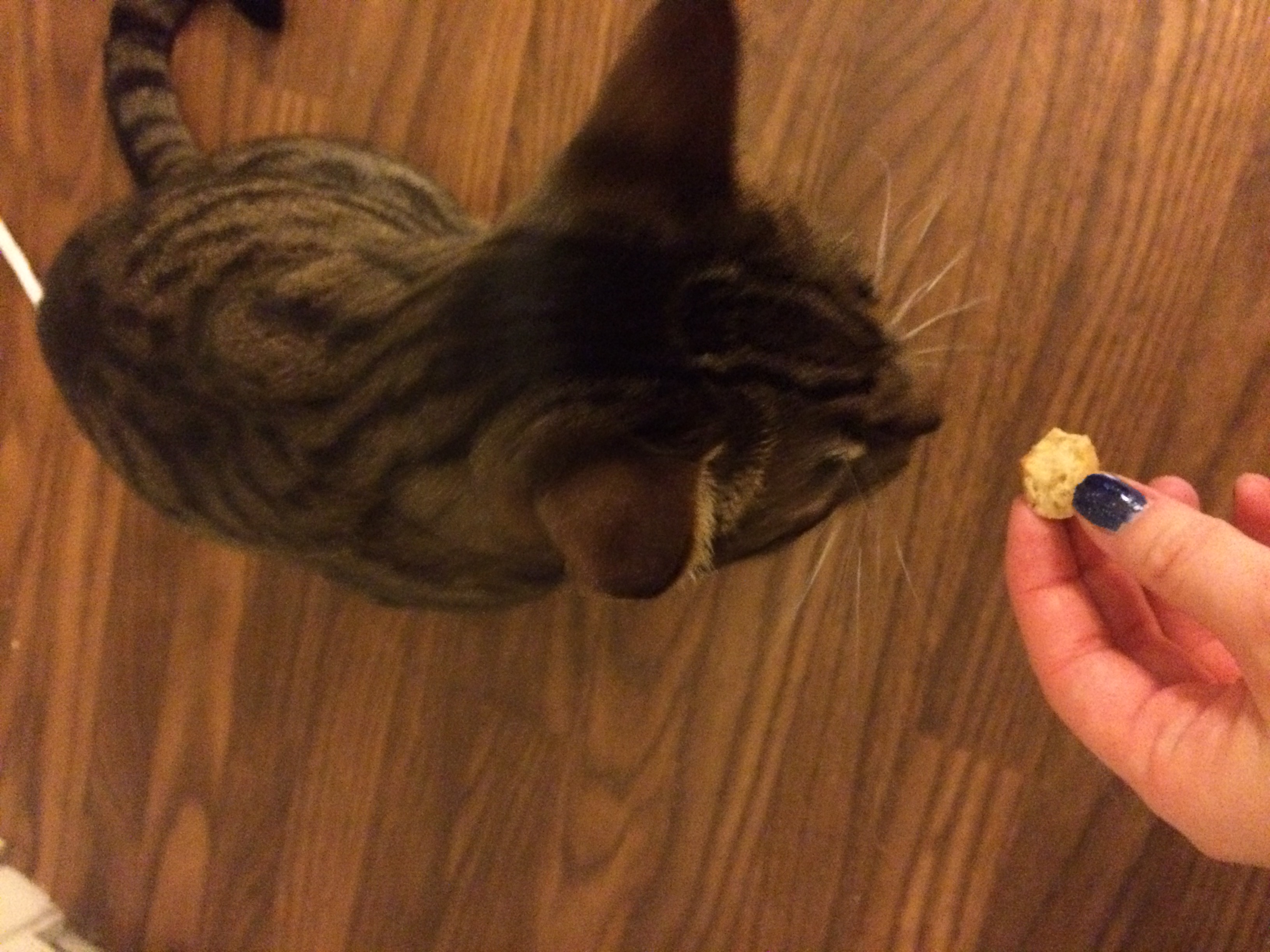
Cooking at home is so wholesome. You have peace of mind from knowing every ingredient that went into the food–no artificial flavors here!–plus the satisfaction you get when someone likes the food you cooked is unbeatable. So why limit this feeling to just human food? Try whipping up a batch of salmon-tuna cat treats at home! They’re so simple, even those among us who “burn water” can do it!
-

- Ingredients: 1 egg, 2 cups all-purpose flour, a 5 oz can of salmon and a 5 oz can of tuna
-
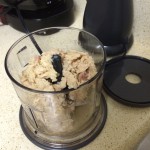
- Empty the cans of fish–UNDRAINED–into a food processor
-
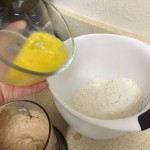
- Combine the egg, beaten, flour and fish paste into a mixing bowl
-

- Mix into a dough. Add more flour if the dough is overly sticky, more water if dough is tough
-
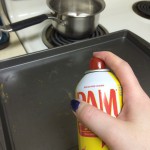
- Spray pan with non-stick cooking spray
-
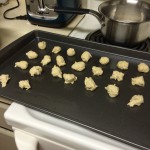
- Roll dough into balls the size of a nickel. Coat palms in flour if dough sticks to hands
-

- Bake at 350 degrees for 30 minutes
-

- Treats should be golden brown when done
Modifications to the recipe: Since the dough created is very much like cookie dough, instead of drop-treats, you can sprinkle flour down on a clean counter and use a cookie cutter to make cut-out shapes. Alternatively, if you cat prefers one type of fish to another, you can do a 10 oz. can of salmon or a 10 oz. can of tuna. You can also substitute the all-purpose flour for whole-wheat for a more nutritious snack.
Enjoy–or, rather–hope your cat enjoys!
(Modified from this recipe.)
Equine Assisted Therapy Benefits
Horses are amazing and intelligent creatures. They can help children and adults with various cognitive disorders such as; depression, aggressive tendencies, eating disorders and many more. They can also work as service animals, substituted for seeing eye dogs and emotional support animals. That job is usually reserved for mini horses, since full sized horses would have some difficulty going on the bus or leading their owner around town. We know that there are many benefits of equine assisted therapy, but today let’s dive into the emotional, psychological and physical benefits by looking at the current medical research.
One scholarly article reviewed 23 studies where equine assisted therapy has proven to work. These results are amazing, as it gives many families hope. Particularly, children with autism struggle with personal relationships. Service dogs help some, but for others many types of therapy are not effective. Many who take part in equine assisted therapy blossom, coming out of their shells. They learn how to take care of another being and be gentle with them, which is a great life lesson for anyone.
 Another study found that the patients, after five weeks of equine assisted therapy, were less irritable, more communicative, and had greater social cognition. The results of equine assisted therapy as part of a treatment plan prescribed by a licensed physician have proven, time and time again, to help many individuals.
Horses are an important aspect of animal assisted therapy and have helped many people in need. Our grant partner, Hearts and Hooves, is changing the lives of special needs children every day. Be sure to join our Facebook page for inspirational updates and an insight look into a (mini horse) session of animal assisted therapy . 1FUR1 would be very grateful if you shared this article and/or join our mission.
The first seeing eye dog program opened its doors on this day in Texas, nearly 90 years ago. In that time, seeing eye dogs have helped thousands of people. To celebrate this, 1FUR1 wants to take a look at some of the inspiring relationships seeing eye dogs have formed with their masters. Seeing eye dogs, one type of guide dog, help their masters regain a sense of freedom and independence. There are many non-profits throughout the country who work hard to train dogs for the blind. These foundations deserve our respect and support.
Buddy: First Seeing Eye Dog
Morris Frank went blind at the age of sixteen. He hired a guide boy to help him to do everyday things. However, he was not nearly as loyal as a dog and often left Frank alone, bored and helpless. Frank was stuck with no help. His father read him an article about an American dog breeder in Switzerland. Frank’s father wrote a letter to the woman, begging to breed and train a dog for his son. She decided to take on the challenge, training two dogs, one who would later become Frank’s dog, Buddy. Buddy led Frank around busy New York City, allowing him to live freely and independently, while paving the way for future seeing eye dogs.
Brave Dog Saves Owner
Figo, a seeing eye dog in New York, was named ASPCA Dog of the Year, and it is no wonder why. Figo and his master were crossing the street when a bus hit them. Figo acted fast when he saw the bus coming, and jumped in front of his master to shield her. He broke a few bones, and was quite injured, but would not leave her side until the ambulance came and took her to the local hospital. Not to worry though – both were given a clean bill of health and continue to work together. Figo was honored by the ASPCA in November of last year for his harrowing acts. He is truly a hero.
Blind Dogs Need Help, Too!
Could seeing eye success stories get any cuter? There have been two notable cases of seeing eye dogs helping their blind counterparts. Kiaya, an Akita who went blind at the age of ten, had no trouble adjusting, as she had the help of the two dogs who lived with her. The two boys walk on either side of her, assisting her while letting her continue to be a curious, intelligent pup. There is no doubt in my mind that the trio are utterly adorable when they are out and about in their Michigan hometown.
The other story of a seeing eye dog for another pup has become an internet sensation. Two Great Danes, Lily and Maddison have been inseperable for the last five years. Lily is blind, but has led a fulfilling life with the help of Maddison. The internet has fallen in love with these two gentle giants, and it is easy to see why.

Maddison, on the left, and Lily have been together for five years. Photo courtesy of justonemorepet.wordpress.org
Seeing eye dogs are amazing creatures. They do fantastic work and deserve the world. Guide dogs, in general, need as much support as they can get. That is why we, at 1FUR1, are committed to our service dog program, along with our animal-assisted therapy and animal-assisted activity programs. Please donate so that we can help as many animals and people as possible.
Rather than attempt to write about how beneficial unchaining a dog would be to you or the dog, I’d like to share the amazing story of Rusty Diamond. Rust is a dog who had been chained up for 10+ years. He was thought to be aggressive and malicious, but was really just lonely and hoping for love. Rusty Diamond is just one example of the many dogs chained up their whole lives, without anyone to take care of them. Watch his story here:
If you can handle anymore videos without crying, check out Coalition to Unchain Dogs’ YouTube channel – and all the amazing work they do.
Cold. Alone. Frightened. It is always sad to see animals helpless and abandoned. For this post, we wanted to give you a few tips on how to handle a situation involving a chained dog.
How to: Unchain Your Own Dog
Some individuals leave their dog outside for days, saying how they are an ‘outdoor dog.’ Dogs get cold, too, when they are outside for too long. There are a few easy ways to train your pup to be a good indoor dog when they are used to being outside all the time.
If you still want them to be outside when you are away at work, try putting up a tall fence so they are free to explore the yard. Your dog will be happier and most likely calmer and less restless because they will have a greater space than simply wherever their leash allows them to go. Make sure that water and shelter is always available to your dogs.
How to: Unchain a Neighbor’s Dog
If you see a dog left alone, contact your local animal control or humane society. Animal control officials are trained professionals who can handle the situation. Do NOT approach the dog and unchain them on your own, as you have no idea how the dog or their owner will respond. You can also talk to your city officials about the current animal cruelty laws and banning chained dogs in your area.
Now, when it comes to dogs belonging to other people, it gets trickier. Try talking to the owner before approaching the dog. Get to know the owner, so that they don’t see you as a stranger approaching their dog. It is important to be friendly in these situations – it gives you the best chance of helping the dog and educating the owner. Talk to them about the alternatives to leaving their dog outside, such as the examples listed above or even possibly re-homing the dog.
There are a lot of factors to consider before including your pet to be in your wedding. For instance, will the venue allow it? Does your pet like to travel, be handled, or be around people? Are any of your guests allergic to your pet? Would you go bride- or groomzilla if your pet relieved himself at the altar? (Hey, it happens!) If you answered “yes,” “yes,” “no,” and “no,” then full steam ahead to begin wedding bliss with tails a-wagging! Read on the top five ways to include your pet in your wedding:
1.) As Transportation
Horse-drawn carriages certainly bring the “fairy tale” aspect of a wedding, but if you’re an avid equestrian, why not cut out the middleman and ride to the altar on your horse? Riding a horse in your bridal gown or tuxedo is super glamorous—like something out of a perfume commercial!—and makes for stunning pictures like the one below.
2.) As Ringbearer/Flower Girl or Bridesmaid/Groomsman
While pets are not that great at scattering petals or holding rings, they sure do look darling in a little bow tie or tutu! Or, if your pet deserves a more central role, have him or her be Best Dog or Cat of Honor! Have your florist make a little floral arrangement for their collar so everyone can see what a special role they play in your wedding.
3.) As the Messenger
What’s better than cute engagement pictures? Cute engagement pictures with a pet! Ask your photographer to take a picture with your pet, and consider turning it into a Save-the-Date invitation with a cute little sign saying “My humans are getting married!”
4.) As the Bouquet
If you’re allergic to or ambivalent about flowers, consider carrying or walking your pet down the aisle instead. Or consider this allergy-proof kitty bouquet from Think Geek!
5.) As the Cake Topper/Invitation Decoration
My own cat couldn’t make it to my wedding because he doesn’t like to travel, but I made sure he made his way to the cake topper! There are several illustrators and sculptors on Etsy who would love to accommodate your pet art request.
Recently engaged? Congratulations! I bet you are already thinking about ways to celebrate your upcoming nuptials with your friends and family, and that could include your pet in your wedding. Please share with us your creative ways to include your pets in your wedding.
Health Benefits for You and Your Dog
Did you know, it’s Walk Your Pet Month? If you didn’t know this holiday exists, we’re hear to remind you of the many healing benefits your pets offer. To jumpstart a healthy lifestyle routine, grab a leash and get going. Your dog is the best personal trainer you can have. They’ll never give you an excuse to forego exercising and will always be energetic, enthusiastic and hardworking.
“Over the last decade or so there have been periodic reports on the association between pet ownership and cardiovascular risk,” said Dr. Glenn N. Levine, a cardiologist with the Michael E. DeBakey Veterans Administration Medical Center in Houston and lead author of a new scientific statement by the AHA which looked at the influence of pets on heart health. Here are the top three heart health benefits of walking your pet:
- Pets are associated with reducing your risk of heart disease
- Pet parents are more likely to have modestly lower cholesterol and triglyceride levels
- People with pets and cardiovascular disease were more likely to survive heart attacks
In addition, The US Department of Health and Human Services states that the health benefits of “regular physical activity is one of the most important things you can do for your health”. It can help:
- Control your weight
- Reduce your risk of cardiovascular disease
- Reduce your risk for type 2 diabetes and metabolic syndrome
- Reduce your risk of some cancers
- Strengthen your bones and muscles
- Improve your mental health and mood
- Improve your ability to do daily activities and prevent falls, if you’re an older adult
- Increase your chances of living longer
That’s not all. According to the American Veterinary Medical Association, more than 40 percent of dogs…a total of about 17 million in the United States, are overweight. “If you walk your dog just 30 minutes a day, you will meet national recommendations for heart health” – said Colleen Paige. Your pet’s health is just as important as yours. Lack of exercise for your pet, can result in serious behavior issues such as aggression, destruction and separation anxiety issues. If your dog has a yard to play in, walking isn’t the only form of exercise available. However, don’t expect your dog to create their own exercise routine just because you’ve put them outside. Dogs don’t self-entertain, so if you want to tire your pet out, play catch or fetch.
Now that you have all the stats, will you go and walk your pet for 30-60 minutes a day? We hope so. Your pet will be happy and you will be healthy. It’s a win-win!